Introduction
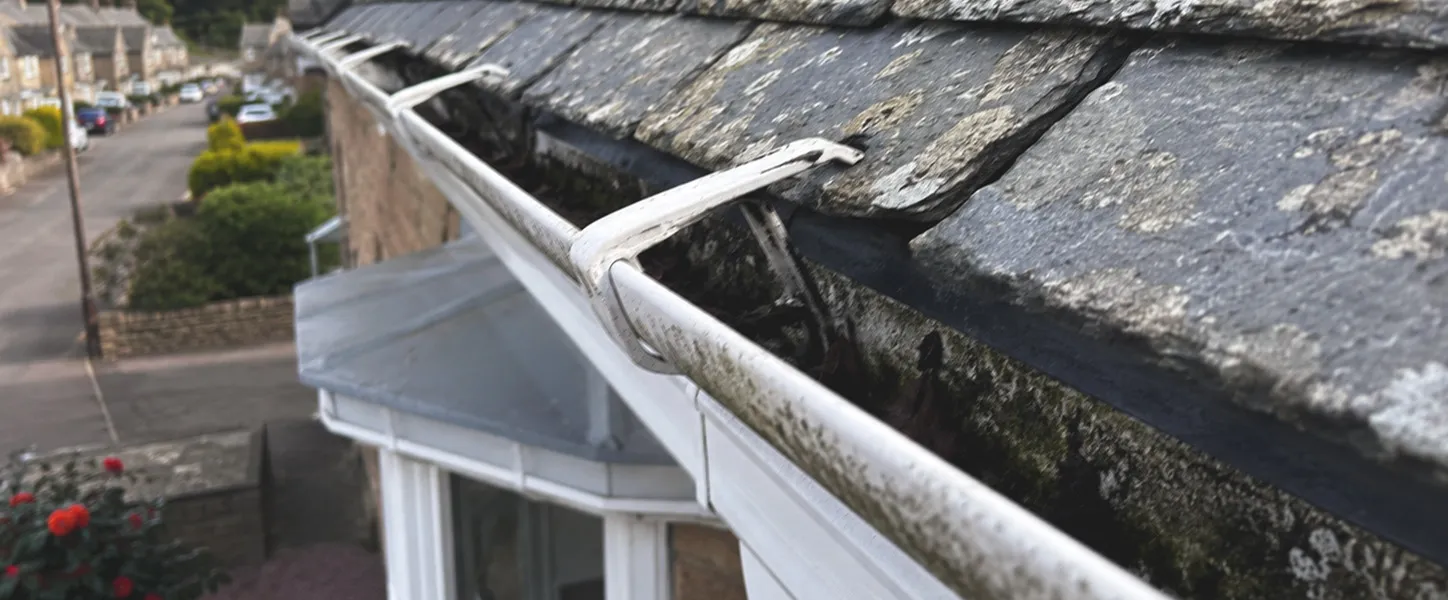
Gutter brackets are the unsung heroes of your roofline. They carry the full weight of your guttering, all the water flowing through it, and every leaf, moss clump and lump of silt that accumulates over the months. When brackets are spaced too far apart, gutters sag, overflow and eventually pull away from the wall.
If you are installing new gutters, replacing old ones, or simply trying to figure out why your existing gutters are dipping, knowing the correct bracket spacing is essential. This guide covers the standard distances, the factors that change them, and what to do if your gutters are poorly supported.
Standard Gutter Bracket Spacing in the UK
For standard half-round or square-profile PVC gutters on a typical UK home, brackets should be spaced no more than 800 millimetres to 1 metre apart. That is roughly 31 to 39 inches.
At corners, stops and joints, fit a bracket within 150 millimetres of the fitting. This prevents the joint from pulling apart under weight. For the centre of a long straight run, space evenly at the 800 millimetre to 1 metre interval.
On a typical semi-detached home with a ten-metre rear gutter run, you would expect to see around ten to twelve brackets supporting that length.
Factors That Affect Bracket Spacing
Gutter Material
Heavy cast iron gutters need more support than lightweight PVC. If you have cast iron, reduce spacing to 600 millimetres. Steel gutters sit somewhere in between. Copper and aluminium are lighter but still benefit from closer spacing in exposed locations.
Roof Size and Run Length
A large roof collects more rainwater. A long gutter run carries more load in its deepest section. Both situations benefit from tighter bracket spacing. For runs over ten metres, consider adding an extra bracket or two in the middle.
Local Weather
In North East Scotland, our gutters deal with heavy rainfall, snow loading, and high winds that test every fixing. Coastal areas like Aberdeen face salt-laden air that corrodes brackets faster. Inland Highland properties see snow and ice buildup that adds serious weight. Both scenarios call for robust bracketing.
Proximity to Trees
Homes beneath trees accumulate debris faster. Wet leaves weigh significantly more than water alone. If your gutters fill quickly between cleans, closer bracket spacing helps them cope with the extra load.
Signs Your Gutter Brackets Are Failing
You do not need to measure every bracket to spot a problem. These visual signs tell you the support is inadequate:
- Visible sagging between brackets, especially in the middle of a run
- Gutters pulling away from the fascia board
- Water overflowing at the lowest point of a sag
- Cracks or splits appearing at joints
- A noticeable tilt or slope away from the downpipe
- Brackets that have come loose or are missing entirely
What Happens When Brackets Are Too Far Apart?
The consequences go beyond a bit of sagging. Water pools in the dip instead of flowing to the downpipe. In winter, that water freezes and expands, warping the gutter. The constant strain loosens joints and can pull the whole section away from the wall. Eventually, water runs behind the gutter, rotting the fascia and soffit.
We see this all the time on properties where the original installer cut corners. A few extra brackets during installation prevents hundreds of pounds in repairs later.
How to Check Your Bracket Spacing
You will need a tape measure, a sturdy ladder, and a helper. Measure the gap between each bracket along a straight run. Note any bracket that is more than one metre from its neighbour. Check corners and joints for a bracket within 150 millimetres. Look for loose, corroded or missing fixings.
If you are not comfortable on a ladder, our team checks bracket spacing as standard during every gutter clean. We will tell you if we spot a problem and can usually add extra brackets on the same visit.
Can You Add Brackets Yourself?
Yes, if you have the right ladder, a drill, and replacement brackets that match your gutter profile. The process is straightforward. Mark the centre point between existing brackets, drill a pilot hole, and screw in the new bracket so it sits level with the others.
Make sure you use rust-proof screws and that you are fixing into sound timber. If the fascia behind is rotten, a new bracket will not hold. That needs timber repair first.
When to Call a Professional
Sam’s Gutter Cleaning inspects bracket spacing, fascia condition, and gutter alignment on every job. We serve homes across ++Ellon++ and the surrounding villages, plus ++Alness++ and the wider Highland region. We can reposition, replace or add brackets as needed. If the damage has gone further, we will give you an honest assessment and a fair quote to put it right.
Conclusion
Gutter brackets should be spaced 800 millimetres to 1 metre apart on most UK homes, with a bracket within 150 millimetres of every corner and joint. Closer spacing is needed for heavy materials, large roofs, and areas with harsh weather.
Checking your bracket spacing is a quick job that can prevent serious water damage. If you would like a professional opinion, get in touch for a free estimate. We cover Aberdeen, Ellon, Alness, Moray and the whole of North East Scotland. Visit ++Sam’s Gutter Cleaning NE Scotland++ to book your appointment online.
Ready to Get Your Gutters Cleaned?
Book your free quote today and keep your home protected from water damage.
Get Free Estimate