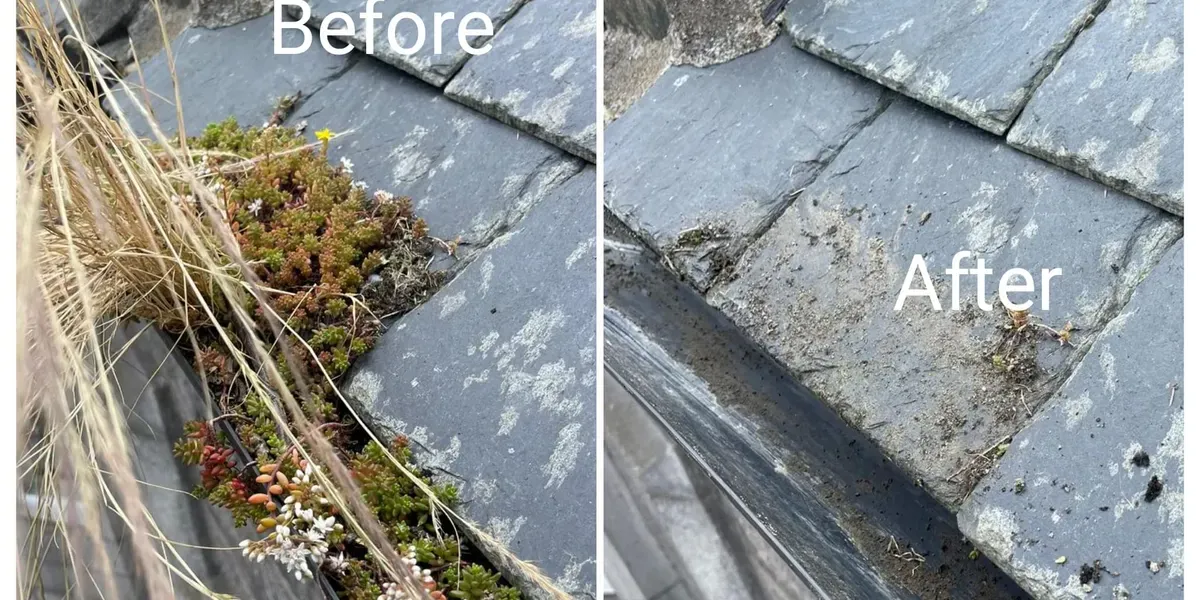
If you have seen water pouring over the side of your gutters during a downpour, you are not alone. Overflowing gutters are one of the most common problems we see across North East Scotland. They might not look serious at first, but they can cause real damage to your walls, roof and foundation.
In this article, we will explain what overflowing gutters are, why they happen, how to fix them, and how to stop them from coming back.
If you would rather leave it to the experts, our Gutter Cleaning service is here to help.
What Are Overflowing Gutters?
Overflowing gutters happen when rainwater cannot flow through your guttering system properly. Instead of running along the gutter and down the downpipe, the water spills over the edge. You might see it at the corners, in the middle, or all the way along.
Your gutters collect rainwater from the roof and carry it safely away from your home. When they overflow, that water lands on your walls, windows, doors or flower beds.
This can lead to damp, staining and damage to the structure of your property.
Some people only notice the problem when gutters overflow in heavy rain. Others see it during light showers. Either way, it is a sign that something is wrong.
Why Overflowing Gutters Shouldn’t Be Ignored
It is easy to think that a bit of water spilling over is not a big deal. But overflowing gutters can cause more damage than you might expect. Here is what can happen.
Water Damage to Walls and Foundations
When water spills over the gutters, it runs down the outside walls.
This can damage brickwork, render and paint. It can also pool around the base of your home and weaken the foundation over time.
Roof Leaks and Damp Patches
Water that cannot drain away may back up under the roof tiles or slates. This can cause leaks inside your loft or ceiling, and damp patches in your upstairs rooms.
Mould, Mildew and Pest Infestations
Damp areas are perfect for mould and mildew to grow. Blocked, wet gutters also attract pests such as insects, birds and rodents.
Landscape Erosion and Staining
Water pouring from gutters can wash away soil, damage plants and leave muddy patches. It can also stain patios, driveways and walls.
Top Causes of Overflowing Gutters
There are several reasons why gutters overflow. Here are the most common causes we come across.
- Blocked Gutters from Leaves and Debris: Leaves, twigs, moss and dirt collect in the gutter over time and block the flow of water. This is especially common in autumn and winter, or if you have trees near your home.
- Incorrect Gutter Pitch or Poor Installation: Gutters need a slight slope so water runs towards the downpipe. If they are fitted too flat, water will sit in the gutter and spill over. This is a common reason for gutters overflowing but not clogged.
- Gutters That Are Too Small for Your Roof: Some roofs produce a lot of rainwater quickly. If your gutters are too narrow or there are not enough downpipes, they cannot cope. This is often why gutters overflow in heavy rain.
- Cracked, Sagging or Damaged Guttering: Old or damaged gutters can sag, crack or pull away from the wall. This changes the shape of the gutter and stops water from flowing properly. A gutter overflowing in the middle is often a sign of sagging.
- Clogged Downpipes and Drains: Even if the gutter looks clear, the downpipe or drain below might be blocked. This stops water from escaping and causes the gutter to fill up and spill over. A gutter overflowing at the corner is often caused by a blocked downpipe nearby.
How to Spot Overflowing Gutters Early
The earlier you spot the problem, the easier it is to fix. Here are the warning signs.
- **Water Spilling Over During Rain: **The most obvious sign is seeing water pour over the edge of the gutter when it rains. Check all sides of the house during heavy showers.
- Stains on Exterior Walls: Brown, green or black marks on your walls can be a sign that water has been overflowing. These stains often appear below the gutter line.
- Plants or Grass Growing in the Gutter: If you can see grass or weeds poking out of your gutters, there is a blockage. Soil and seeds have built up and created a place for them to grow.
- **Pooling Water Near Your Property: **Water collecting near walls, in flower beds or on paths can be a sign that your gutters are not directing rainwater away.
How to Fix Overflowing Gutters
There are a few ways to fix overflowing gutters. Here are the main gutter overflow solutions.
- Clear Out Leaves, Moss and Debris: The first step is to remove anything blocking the gutter. This is often done by hand with gloves and a bucket. Be very careful if you need to use a ladder.
- Flush the Downpipes with Water: Once the gutter is clear, run a hose into the downpipe to wash out any blockages. If water flows freely out of the bottom, the downpipe is clear.
- Check and Adjust the Gutter Slope: Gutters should slope gently towards the downpipe. If water is sitting in the gutter, the slope may need adjusting. This usually means moving the brackets.
- Repair or Replace Damaged Sections: If a section of gutter is cracked, sagging or broken, it will need to be repaired or replaced. Our Gutter Repairs service can help with small fixes such as resealing joints and fitting new brackets.
- Install Gutter Guards to Prevent Future Blockages: Gutter guards sit over the top of the gutter and stop large bits of debris from getting in. They will not stop every leaf, but they can cut down how often you need to clean the gutters. Ask us about Gutter Guard Installation for a longer-term fix.
When to Call a Professional for Overflowing Gutters
Some gutter jobs are simple, but others are better handled by a trained expert.
If Your Gutters Are Hard to Reach Safely
Working at height is dangerous. If your gutters are high up or in an awkward spot, it is safer to get a professional. Our Multi-Storey Gutter Cleaning service uses a SkyVac to reach gutters up to 4 storeys safely from the ground.
If the Problem Keeps Coming Back
If you clean your gutters but they overflow again within weeks or months, there may be a deeper issue. A professional can check the slope, size and condition of your gutters.
If You Notice Structural Damage
If you see cracks in walls, sagging gutters, roof leaks or signs of rot, call a professional straight away.
How to Prevent Overflowing Gutters Year-Round
Prevention is better than dealing with water damage. Here are simple ways to keep your gutters working all year.
Schedule Regular Gutter Cleaning
The best way to prevent overflowing gutters is to have them cleaned regularly. For most homes in NE Scotland, once a year is enough.
If you have lots of trees nearby, twice a year is better.
Trim Overhanging Trees
Cutting back branches that hang over your roof reduces the leaves and twigs that land in your gutters.
Inspect Gutters After Heavy Storms
Strong winds and heavy rain can fill gutters quickly. After a storm, check for blockages, sagging or damage.
Invest in Quality Gutter Protection
Gutter guards, regular cleaning and proper installation all help keep water flowing.
Why Choose Sam’s Gutter Cleaning For Overflowing Gutters?
At Sam’s Gutter Cleaning, we are a local family business serving homes and businesses across North East Scotland. We know the area, the weather and the common gutter problems that come with it.
We offer a full range of services, including Gutter Cleaning, Gutter Guard Installation, Full Wash Service, Conservatory Roof Cleaning and Commercial Gutter Cleaning.
Whether you live in a bungalow or a townhouse, we have the tools and training to get the job done safely.
Our pricing is clear and honest. We will confirm your quote before we start, and we will never sell you something you do not need. We also take photos of the work if requested.
If you are wondering why my gutters are overflowing, or you need help to fix overflowing gutters, get in touch today. We will sort the problem and leave no mess behind.
FAQ
Why Are My Gutters Overflowing But Not Blocked?
If your gutters are clear but still overflow, the problem could be the slope, the size of the gutter, or a blockage in the downpipe.
If they are too flat or too small, they cannot cope with heavy rain.
Can Overflowing Gutters Cause Roof Leaks?
Yes. When water cannot drain through the gutter, it can back up under the roof tiles or slates. This can cause leaks and damp patches.
How Often Should Gutters be Cleaned to Prevent Overflowing?
Most homes should have their gutters cleaned once a year. If you have lots of trees nearby, or if you often get gutters overflowing in heavy rain, twice a year is better.
Is It Safe to Fix Overflowing Gutters Myself?
Small jobs like removing a few leaves might be fine if you can reach safely. But working at height is risky. It is usually safer and quicker to hire a professional.
How Much Does it Cost to Fix Overflowing Gutters?
The cost depends on the size of your property and what needs doing. A routine gutter clean is affordable, while repairs or guard installation cost more. Contact us for a quote.
Conclusion
Overflowing gutters are a common problem, but they should never be ignored.
Whether your gutters overflow in heavy rain or spill over at the corners, there is always a reason and a fix. Regular cleaning and small repairs can protect your home from water damage and dampness. If you need help with overflowing gutters in North East Scotland, Sam’s Gutter Cleaning is ready to help. Book online or give us a call.
Ready to Get Your Gutters Cleaned?
Book your free quote today and keep your home protected from water damage.
Get Free Estimate