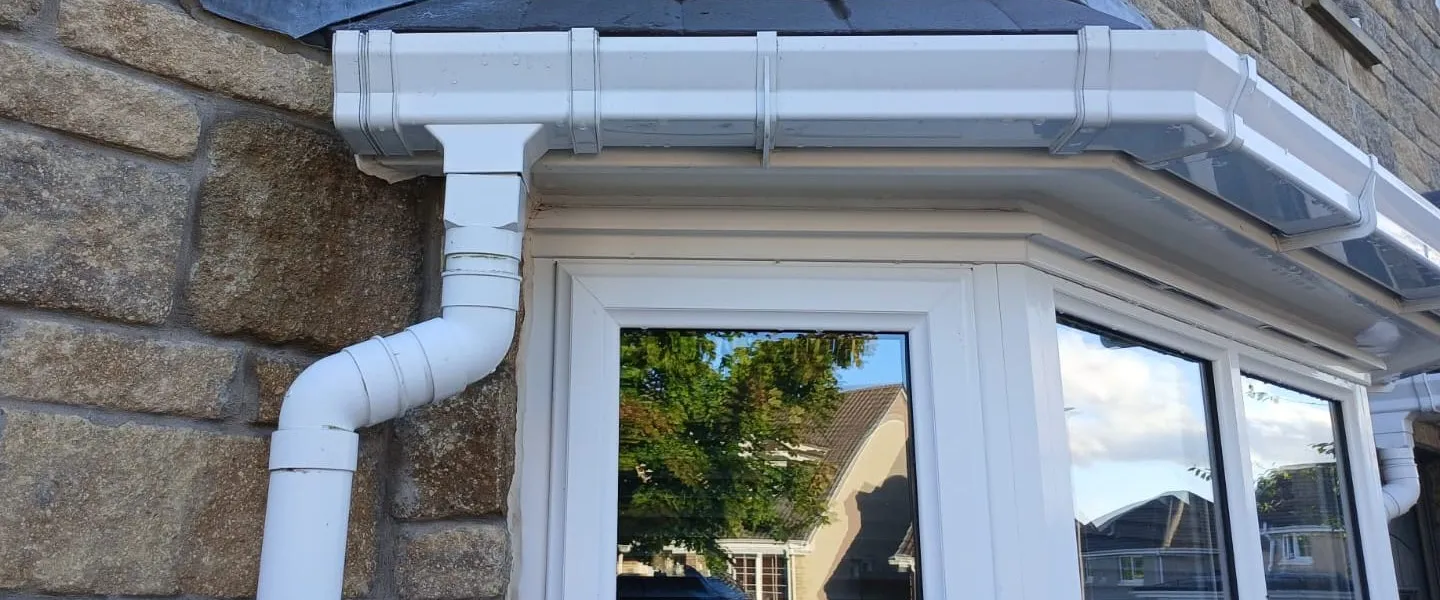
Leaking gutters are a pain. Even a small drip can lead to bigger problems if it is not fixed, such as damp walls, stained brickwork, and damage to your foundations.
One of the easiest ways to patch a small leak is to use gutter sealant. But before you start, you need to know: how long does gutter sealant take to dry?
At Sam’s Gutter Cleaning, we help homeowners and businesses across NE Scotland keep their gutters in good shape. Our Gutter Repairs service sorts out leaks, loose joints, and broken brackets. But we also know that some people prefer to try a quick DIY fix first.
This guide explains gutter sealant drying times so you can plan the job and avoid wasting time or money.
How Long Does Gutter Sealant Take to Dry?
Most gutter sealants feel dry to the touch within 30 minutes to a few hours.
But feeling dry is not the same as being fully cured. Curing is when the sealant has hardened all the way through and formed a strong, waterproof bond.
For most products, the full curing time is between 24 and 48 hours.
Some fast-drying sealants may cure in 3 to 6 hours, while thicker polyurethane or butyl rubber sealants can take up to 7 days in poor conditions.
The most important thing to remember is this: do not let the sealant get wet before it has healed. If it rains too soon, the sealant can wash away, bubble, or fail to stick.
That means you need to check the weather forecast before you start.
What Affects Gutter Sealant Drying Time?
Several things can change how long gutter sealant takes to dry. Here are the main factors.
Type of Sealant Used
Different sealants dry at different speeds. Silicone-based sealants usually dry the fastest.
Polyurethane sealants are slower but very strong. Butyl rubber sealants are thick and sticky, which makes them good for gaps and joints, but they can take longer to cure.
Always read the instructions on the tube. The manufacturer will tell you the drying time, curing time, and the best temperature range for the product.
Weather and Temperature
Sealant dries best when the air temperature is between 10°C and 25°C.
In cold weather, the chemical reaction that hardens the sealant slows down. In very hot weather, the surface can skin over while the inside stays soft.
In Scotland, we do not always get perfect DIY weather. That is one reason many people prefer to leave gutter work to the professionals. If you book a Gutter Cleaning or repair visit with us, we pick the right materials for the conditions.
Humidity Levels
The more humid it is, the slower the sealant will dry. Scotland can be quite humid, especially near the coast or during autumn and winter. If the air is damp, the sealant cannot release moisture properly, and curing takes longer.
Gutter Material and Surface Condition
Sealant sticks best to clean, dry surfaces.
If your gutters are full of moss, dirt, or old peeling sealant, the new sealant will not bond well. It may take longer to dry and could start peeling within weeks.
Different gutter materials also behave differently. Plastic gutters, aluminium gutters, and cast iron gutters may need different types of sealant.
Check the label to make sure the product is suitable.
Typical Drying Times For Different Gutter Sealants
Here is a simple breakdown of the three most common types of sealant.
Silicone-Based Sealants
Silicone sealants are flexible, waterproof, and easy to find.
Most are touch-dry in 30 to 60 minutes and fully cured in 24 hours. Some fast-drying versions cure in 3 to 6 hours, but only if the weather is warm and dry.
They are a good choice for small cracks and joints in plastic or metal gutters. However, they do not stick well to every surface, so read the label before buying.
Polyurethane Sealants
Polyurethane sealants are very strong and durable. They stick well to most gutter materials and can handle movement and temperature changes.
The downside is that they take longer to cure.
Most polyurethane sealants need 24 to 48 hours to cure fully.
In cold or damp Scottish weather, this can stretch to a week. They are a good option if you want a long-lasting repair and can leave the gutter dry for several days.
Butyl Rubber Sealants
Butyl rubber sealants are thick and tacky.
They are often used for sealing overlaps, joints, and larger gaps. They can take 24 to 72 hours to cure, and they do not perform well in cold conditions.
Because they stay soft for a while, they can pick up dirt and leaves if applied too thickly.
Use them sparingly and only on clean, dry surfaces.
How to Know If Your Gutter Sealant Is Fully Dry
Do not just look at it and hope for the best. Here are three simple ways to check.
- Touch Test: Lightly press the edge of the sealant with a gloved finger. If it feels sticky, soft, or leaves a mark, it is not ready.
- Colour Check: Many sealants change colour as they cure. A fresh bead may look shiny or wet, while cured sealant looks duller and more even.
- Flex Test: Once cured, the sealant should feel firm but still slightly flexible. If it bends or smudges easily, give it more time. If you are not sure, wait another day. It is far better to be patient than to have to climb back up and do the job again.
Tips For Faster and Stronger Gutter Sealant Curing
Here are some simple ways to help your sealant dry faster and create a stronger repair.
- Pick a dry day: Check the forecast and make sure you have at least 48 hours without rain. Even a light shower can ruin the finish.
- Clean the gutter first: Remove leaves, moss, and old sealant. A clean surface helps the new sealant bond properly.
- Dry the area: Use a cloth or sponge to soak up any standing water. The sealant will not stick to a wet surface.
- Apply a thin, even bead: Thick blobs take much longer to cure because the outside dries before the inside.
- Use the right sealant: Make sure it is designed for outdoor gutters and suitable for your gutter material.
- Start in the morning: This gives the sealant the warmest part of the day to begin curing. Avoid starting late in the evening when temperatures drop. If the job feels too big or too high, call a professional. Our team carries out Gutter Repairs safely using the right tools and materials.
Common Mistakes That Slow Down Gutter Sealant Drying
Many people make small mistakes that cause their sealant to fail. Avoid these common ones.
- Applying sealant to a wet gutter: Water stops the sealant from bonding and can cause it to bubble or peel.
- Using indoor sealant outside: Indoor products are not made to handle rain, frost, or UV light. They will break down quickly.
- Putting on too much: A thick layer may look stronger, but it takes much longer to cure and may never harden all the way through.
- Sealing over rust or dirt: The sealant sticks to the dirt, not the gutter. It will peel off as soon as it gets wet.
- Ignoring the weather: A sunny morning can turn into a rainy afternoon. Always check the full forecast.
When to Apply Gutter Sealant For Best Results
The best time to apply gutter sealant in Scotland is during a dry, mild spell between spring and early autumn. Temperatures are usually more stable then, and there is less chance of frost or heavy rain. Try to start the job in the late morning, after any dew has dried but before the afternoon heat peaks. This gives the sealant the best chance to cure evenly.
For taller homes, working at height adds extra risk.
That is why we offer Multi-Storey Gutter Cleaning for properties up to four storeys, using a SkyVac system so we can work safely from the ground. If you run a business, keeping your gutters sealed and clear is just as important. Our Commercial Gutter Cleaning service helps protect shops, offices, and commercial buildings across NE Scotland.
FAQ
How Long Does Gutter Sealant Take to Dry Before It Gets Wet?
Most sealants need at least 24 hours before they can handle rain. Some fast-drying products may be ready in 3 to 6 hours, but waiting a full day is the safest option.
Can Gutter Sealant Dry in Cold Weather?
It can dry, but it takes much longer. Below 10°C, curing slows down a lot. In freezing temperatures, some sealants may not cure properly at all.
What Happens If Gutter Sealant Gets Wet Before Drying?
It can wash away, bubble, crack, or fail to form a proper seal. If it gets wet too soon, you will usually need to remove it and start again.
How Can I Make Gutter Sealant Dry Faster?
Clean and dry the gutter first, apply a thin bead, and choose a warm, dry day with low humidity. Good airflow and direct sunlight also help speed things up.
Is Fully Dry Gutter Sealant Waterproof?
Yes. Once it has cured fully, a good quality gutter sealant becomes waterproof and flexible. It should handle rain, temperature changes, and normal gutter movement without cracking.
Conclusion
So, how long does gutter sealant take to dry? Most products are touch-dry in under an hour, but they need at least 24 hours to cure fully.
The exact time depends on the sealant type, temperature, humidity, and how well you prepared the surface. Gutter sealant can be a useful short-term fix for small leaks.
But if your gutters are cracked, sagging, or leaking in several places, a DIY patch may not last. In those cases, it is better to get professional help.
At Sam’s Gutter Cleaning, we offer a range of services to keep your roofline in good condition. Alongside Gutter Cleaning, we also provide Gutter Guard Installation, Full Wash Service & Conservatory Roof Cleaning.
Book online in two minutes or give us a call for a free quote. We are a local family business, and we are happy to help homes and businesses across NE Scotland.
Ready to Get Your Gutters Cleaned?
Book your free quote today and keep your home protected from water damage.
Get Free Estimate